Home / Additional Information /
Scientific part of all excursions in the Ural mountains will include:
1) introduction about natural features of Urals visiting region during trip to place of excursion;
2) demonstration and lecture about regional mountain forests during field trip to treeline ecotone sites;
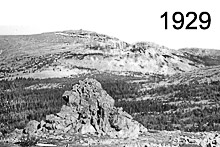
3) visiting of several sites (points) from which old (first half of XX century) landscape photos were made within treeline ecotone and comparison them with contemporary situation;
4) visiting permanent study plots installed along altitudinal gradients within treeline ecotone, including demonstration of contemporary site and stands 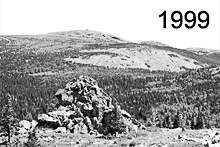 structure characteristics (plot altitude; month local air and soil temperature; average snowpack depth; age of each trees and samplings; vegetation description; soil features); structure characteristics (plot altitude; month local air and soil temperature; average snowpack depth; age of each trees and samplings; vegetation description; soil features);
5) mini workshop after field excursion (last evening or on back way to Ekaterinburg) with some presentations of treeline investigation results from other parts of the Urals.
Significant variation in global and regional climate has occurred on decadal to centennial time scales during the last 3000 years (Briffa et al. 1990, 1992; Hantemirov 1995; Hughes and Graumlich 1996). In the recent past a period of climatic cooling from about 1425 to 1850 A.D., called the Little Ice Age (Lamb 1977; Röthlisberger 1986), was followed by a period of warming since the end of the 19th century (Jones et al. 1982; Briffa et al. 1995). The average surface temperature around the world has risen by about 0.3 to 0.6 degrees over the past 100 years and by about 0.2 to 0.3 degrees over the last 40 years (IPCC 2001). In the arctic and alpine regions, the estimated temperature anomalies for the same period were twice as large as those averaged for the northern hemisphere (Kelly et al. 1982). Predictions for the next 100 years suggest an increase of the average surface temperature around the world from 1.4 to 5.8 degrees (IPCC 2001).
The observed and predicted temperature increases might have large effects on global vegetation, particularly on tree-line ecosystems where plant growth is temperature limited (Körner 2000). Vigorous tree regeneration in openings, and an upward shift of the tree-line of 30 to 60 meters during the last 60 to 80 years, have been reported for various arctic and alpine tree-line ecotone areas around the world (e.g. Brinks 1959; Gorchakovsky and Shiyatov 1978; Hessl and Baker 1997; Kearney 1982; Payette and Gagnon 1979; Payette and Filion 1985; Sonesson and Hoogesteger 1983; Weisberg and Baker 1995). Significant seedling establishment, closing of open forest structures or stimulation of radial growth near tree-line is well documented for various mountain areas around the world: Canada (e.g. Kearney 1982), California (Vale 1987; Taylor 1995; Lloyd 1997), Wyoming (Dunwiddie 1977; Jakubos et al. 1993), Oregon (Franklin et al. 1971; Little et al. 1994), Washington (Woodward et al. 1995; Rochefort and Peterson 1996), Central Europe (Nicolussi et al. 1995; Paulsen et al. 1999), Northern Europe (Hustich 1948; Agren et al. 1983; Kullman 1986, 1988), and New Zealand (Wardle and Coleman 1992).
The atmospheric CO2 concentration has increased from a pre-industrial concentration of less than 280 ppmv up to 370 ppmv, and it could double before the end of the 21st century (Schimel, 1995; Keeling et al., 1995). Carbon dioxide is not only radiatively active and an important contributor to the so-called 'greenhouse effect', but is also an essential substrate for photosynthesis and thus plant growth. In the current negotiations about the Kyoto Protocol, the role of terrestrial ecosystems as sinks for increasing atmospheric CO2 concentrations is highly debated. Terrestrial ecosystems contain three times as much carbon as the atmosphere (Schimel, 1995), and global fluxes of CO2 between soils and atmosphere exceed the CO2 released by fossil combustion by an order of magnitude (Raich & Potter, 1995). Climatic warming has two opposing influences on carbon storage in terrestrial ecosystems. While rising temperatures enhance net primary production (C accumulation), they also stimulate respiration (C losses) from ecosystems. Because the net C balance of an ecosystem is the difference between these two large fluxes, a relatively small change in either direction may have significant impacts on the roles of ecosystems as sinks or sources of C (Shaver et al., 1992), and thus may have important implications for the global C cycle (Oechel et al., 1993).
The observed upward shift of the tree line most likely stimulates the production of aboveground biomass, which would increase C accumulation on a regional scale. In contrast, the observed and predicted increase in temperature will likely increase the release of CO2 from the soil to the atmosphere through respiration. Soil respiration is very sensitive to warming, particularly at lower temperatures (Kirschbaum, 1995). Since soils contain about 60 to 80% of all terrestrial carbon pools (Dixon et al., 1994; Perruchoud and Fischlin, 1995; Schimel, 1995), a small increase in soil respiration may exert a large influence on global C dynamics. In arctic and alpine environments, soil C might become a particularly large CO2 source through thawing of permafrost. Thawing of permanently frozen soil horizons makes previously 'protected' soil C accessible for microbes and leads to large respiration losses to the atmosphere (Goulden et al., 1998; Hobbie et al., 2000).
Tree-line ecotones are especially suitable areas for studying early ecosystem responses to climate warming, because plant growth is temperature limited. They are also ideal for investigating temperature effects on C storage of ecosystems, because the climatic gradients and associated changes in vegetation patterns occur over short distances (Tranquillini 1979; Delcourt et al. 1992; Slatyer 1992; de Groot and Ketner 1994; Risser 1995, Körner 2000, Becker & Bugmann 2001).
One problem for the investigation of tree-line dynamics is that most mountain systems of temperate climatic zones are exposed to anthropogenic disturbances. A good example is the European Alps, where chronic human impacts, such as tree fellings, dry wood and litter utilisation, and forest grazing, have long affected forest and landscape structure, dating back to pre-Roman times (Welten 1982, Haas and Rasmussen 1993, Burga and Perret 1998).
Therefore, investigations of the effects of climate change on tree-line ecotones of mountain ranges such as the Alps are complicated, and direct human influences are superimposed on climate-related processes.
Other mountain systems of Eurasia, such as the South and North Urals, are much more suitable for investigating climate induced processes, because many mountain forests in these areas have never been disturbed by extended human activities and have never been exposed to regional air pollution.
In a recently finished INTAS-project (2001-0052) the spatio-temporal dynamics of the upper treeline and the implications for carbon sequestration in the Southern parts of the Urals and in the Polar Urals along altitudinal gradients have been analyzed. The comparison of repeated landscape and aerial photographs and repeated mapping of stand structures clearly showed vigorous tree regeneration and a considerable increase of treeline elevation in the South and North Urals (Moiseev & Shiyatov, 2003; Shiyatov 2003; Moiseev et al. 2004). It was revealed that during the last century, a ‘filling-in’ process at the former upper treeline took place, and the upper limits of open and closed forests shifted upward by as much as 60-80 m of altitude, corresponding to an advance of up to 500-900 m horizontally on gentle slopes (Shiyatov 2003; Shiyatov et al. 2005; Van der Meer et al. 2004).
Since the Ural highlands are not influenced by humans, the upward shift of the treeline can most likely be attributed to the observed climate warming: climate records over the last 150 years were analyzed, showing that winter and spring temperatures increased by 1.5-2.5°C in the South and Polar Ural mountains with consequences for tree establishment and tree growth (Shiyatov & Mazepa, 2002; Moiseev & Shiyatov, 2003; Moiseev et al. 2004; Van der Meer et al. 2004). Beside this general forcing of temperature on tree growth, research gaps still exist on the specific functioning of the regeneration dynamics which is central for a successful shift of treelines. What climatic factors are limiting e.g. seed production, seedling germination and sapling survival? Based on dendroecological analysis, it was hypothesized that temperatures during the two years before germination are crucial for flowering, seed production and ripening in the South Urals (Moiseev et al. 2004). During the first years of seedling growth drought can also be limiting on semidry sites. High snow cover during the first years up to decades is protecting the seedling and sapling from extreme frost and abrasion by ice crystals. So far, it could be only indirectly infer from climate-tree growth relationship on limiting factors.
The upward shift of the tree-line and the increase of the density of these forests has implications for biodiversity. Preliminary estimations suggest that the total tundra area in the South Urals has decreased by 10-30% over the last century. During the same period, average surface temperatures have risen by about 1- 1.5°C. If temperature in the next 100 years will further increase (IPCC 2001), we expect a complete disappearance of the mountain tundra vegetation on 7 out of 16 summits. For the whole South Ural highlands, the mountain tundra vegetation would be reduced by 40- 70% with negative consequences for biodiversity.
 
|